
Your agents need a plan before they produce.
AI marketing agents fail without context. Give them a roadmap and they execute. Without one, they guess.
A marketing AI agent is a specialized tool that completes a defined marketing task — writing an email sequence, auditing a landing page, building an SEO brief — without you doing the work manually. The agent needs a clear brief, a specific audience, and a goal. Most teams skip those inputs and wonder why the output is generic.
The problem is the lack of context. An agent handed a vague instruction produces a vague result. This is similar to instructing a new employee to launch a campaign without giving them the Brand and Style guide. An agent handed a specific task inside a structured plan that includes a defined audience, clear goal, and the channel produces something you can use.
That’s the difference between agents that scale your business and agents that create more editing work than just writing the thing yourself.
By the numbers
Everything between the goal and the result
Output you can publish
Agents with proper context produce drafts, structures, and audits that are close to final. You stop rewriting from scratch and start making decisions instead.
Marketing that compounds
When every task connects to a goal, outputs stack. An email sequence feeds a nurture flow. An SEO brief feeds a content calendar. Nothing sits in isolation.
One place for everything
Deliverables save back into the project automatically. No hunting through chat windows or downloaded files to find what the agent produced last week.
Specialists without the headcount
Roughly 40 specialized agents cover email, paid ads, SEO, conversion, and copy. You get specialist-level output without hiring a specialist for each channel.
Human judgment stays in control
Agents produce. You decide. Every output is reviewable before it goes anywhere. The agent does the labor; you make the call on whether it ships.
No reporting step required
Progress is visible on the dashboard as tasks complete. You know what’s done and what’s next without building a separate tracking system.
How it works, step by step
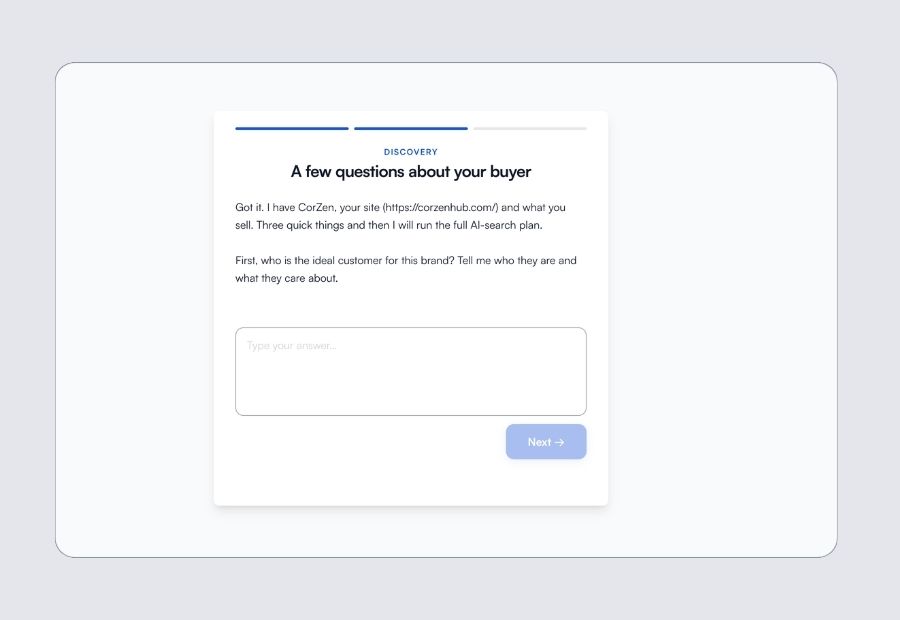
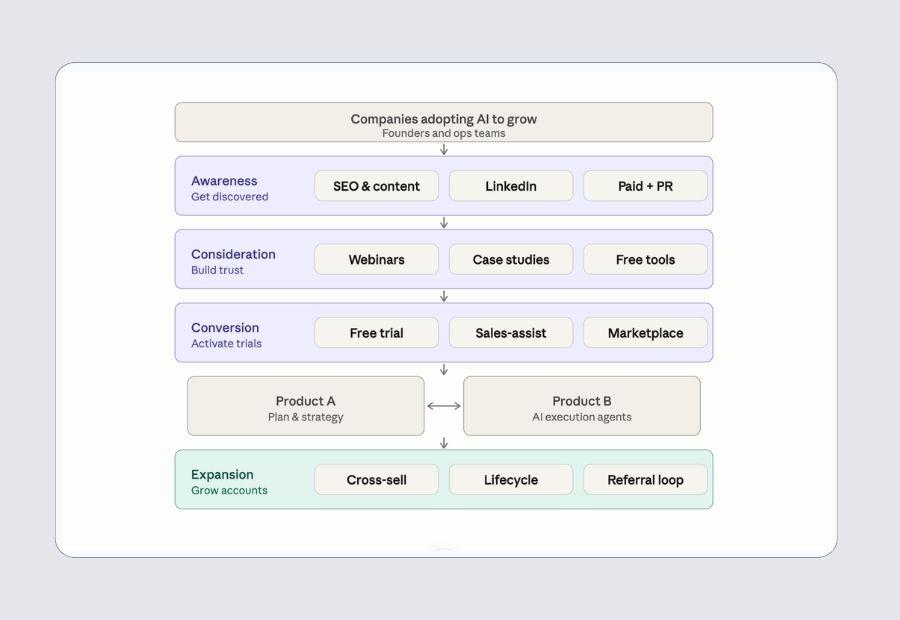
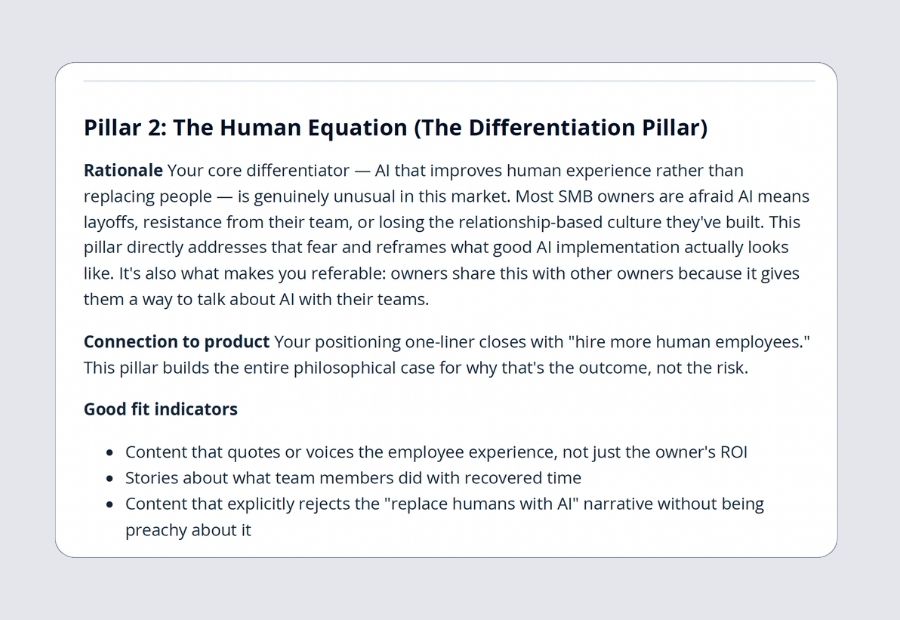
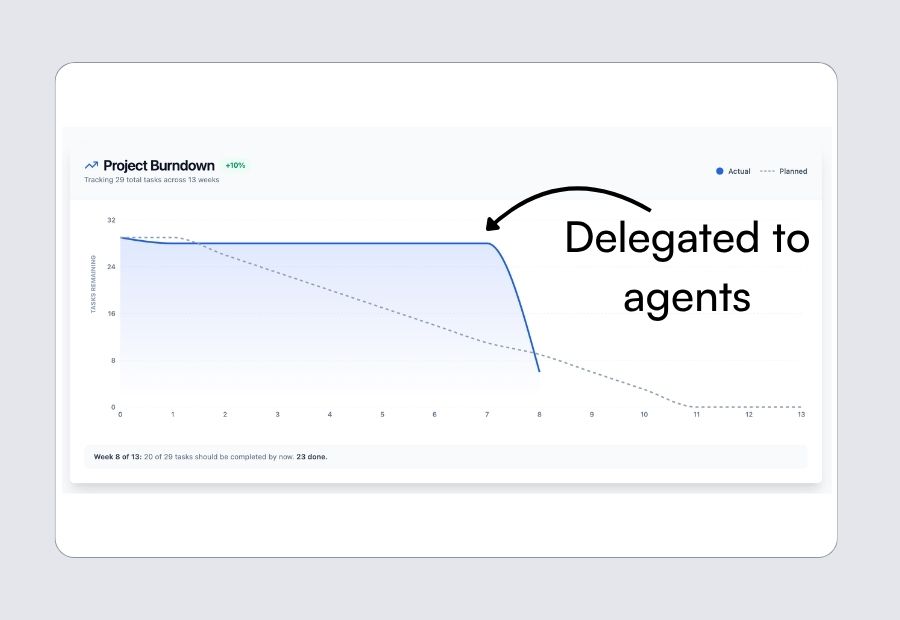
That’s how long it takes to go from a business objective to a full marketing plan with tasks ready for agents to execute.
What changes when you get this right
Marketing output ships without you being the bottleneck on every draft.
Every channel tells the same story because the brief never changes.
You stop second-guessing what to work on next — the plan decides.
Specialists-level copy and strategy exist inside your team even if your team is one person.
Completed deliverables accumulate into a real marketing asset library, not scattered files.
Customers encounter consistent, relevant messaging regardless of where they find you first.
Frequently asked questions
No. You describe your goal, the plan gets built, and you click an agent’s icon on a task to run it. There are no prompts to engineer, no models to configure, and no API keys to manage.
Yes. Agents produce; you decide. Every output is saved for your review before anything goes live. Human judgment on whether something ships is not something you delegate to an agent.
A general chatbot has no memory of your plan, your audience, or your previous decisions. Each conversation starts from zero. Agents inside a structured plan carry context forward, so every output connects to the same goal and the same audience definition.
The current library covers email sequences, SEO briefs, paid ad copy, landing page audits, conversion optimization, and more — roughly 40 specialized agents in total. Each one is built for its specific output type, not adapted from a generic model. You can use the same agent across many projects at the same time, with each agent focused only on that one project.
A marketing AI agent is a tool trained to complete a specific marketing task — writing email sequences, building SEO briefs, auditing landing pages, generating ad copy. It’s not a general chatbot. It’s built for one job and does that job at the expert level without you doing the manual work.
Low-quality output almost always comes from insufficient context. An agent that doesn’t know your audience, your goal, or your channel will produce something generic. Agents that receive a specific brief inside a structured plan produce results that are close to publishable.
Your plan is
already mapped.
Set your goal. Answer a few questions. CorZen turns it into a week-by-week plan you can run without guessing what comes next.
See how CorZen plans the work