
Your B2B GTM playbook customized for you.
Most B2B launches stall because strategy is based on guesses or random advice from Reddit. A customized GTM playbook changes that.
Build my B2B GTM planA B2B go-to-market playbook is not a slide deck. It is a working document that tells every person on your team who you sell to, how you reach them, and what winning looks like this quarter.
Most B2B companies skip it. They launch with a general sense of direction, run outbound for 60 days, get inconsistent results, and then debate whether the product is the problem. The product is rarely the problem.
Get the playbook right and the signals change fast. Sales cycles shorten. A qualified pipeline replaces noise. You stop wondering what to do next.
By the numbers
Everything between the goal and the result
A sharp Ideal Customer Profile
When your ICP is precise, every outbound message lands with higher relevance. Conversion rates climb because you stop talking to the wrong people.
Channel strategy that compounds
Outbound generates early pipeline. Inbound builds leverage over time. A GTM playbook that runs both — with clear ownership — compounds instead of churning.
Sales and marketing in sync
Deals close faster when sales has the right collateral before the call. Misalignment between marketing and sales is the most common reason qualified leads go cold.
OKRs that reflect reality
Vanity metrics hide the truth. The right success metrics surface what is actually working — pipeline velocity, win rate, time to close — and guide the right decisions.
90-day cadence
A strategy without a weekly plan is a wish. Quarterly goals broken into weekly tasks turn direction into measurable progress.
Fewer decisions in your head
When the playbook is documented, your team executes without waiting for you. That is the outcome that compounds everything else.
How it works, step by step
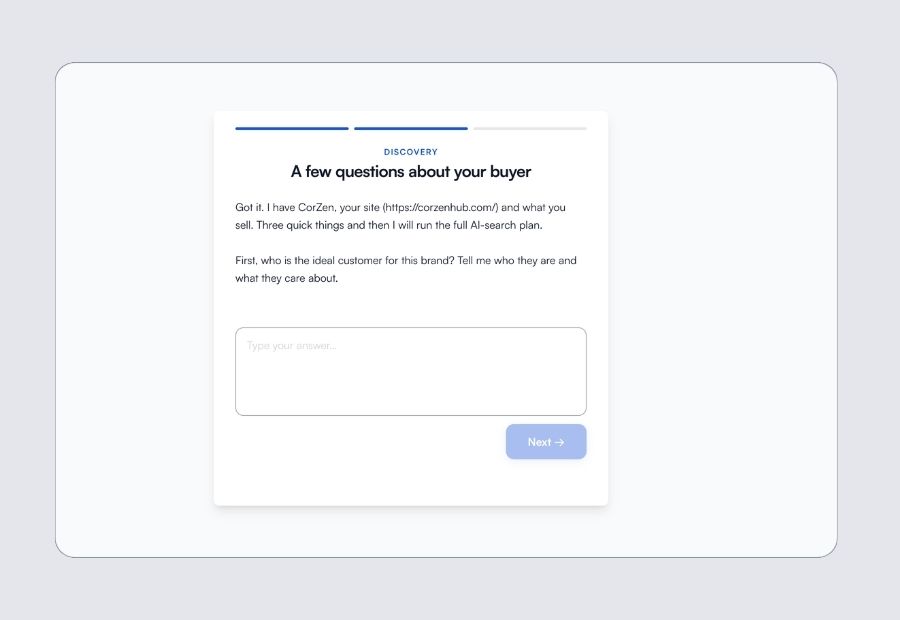
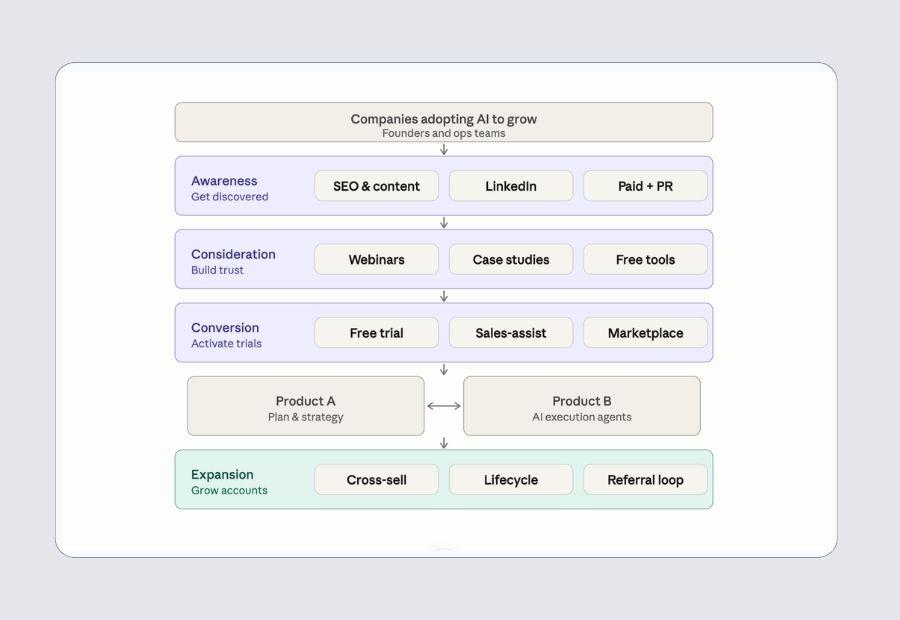


B2B teams with a documented GTM playbook generate a qualified pipeline in 30 days; those without one average 90 days or more of repositioning before traction appears.
What changes when you get this right
Your sales team reaches the right accounts the first time — no recycled lists, no repositioning mid-quarter.
A qualified pipeline replaces volume. Your calendar fills with conversations worth having.
Marketing and sales share the same language, the same targets, and the same definition of a good lead.
OKRs reflect real performance signals, so bad bets die early and good ones get more resources.
Execution continues when you step away. The playbook holds the decisions so you do not have to.
Quarter-over-quarter improvement becomes visible in the numbers your board cares about.
Frequently asked questions
Start with your best current customers. Identify the firmographic traits — industry, company size, revenue, tech stack — and the behavioral signals that preceded the purchase. Your ICP is the intersection of those patterns, not a persona you write in a workshop.
CorZen runs a guided discovery interview, generates a 90-day GTM roadmap broken into weekly tasks, and gives access to AI agents that produce the deliverables — email sequences, sales decks, SEO content, and more.
A marketing plan covers promotion. A GTM playbook covers the full revenue strategy — ICP, positioning, channel strategy, sales enablement, pricing, and success metrics. Marketing is one input. The playbook is the whole system.
Outbound generates predictable short-term pipeline. Inbound compounds over time and lowers acquisition cost. Early-stage B2B companies need outbound to survive and inbound to scale. The playbook defines which channel owns which stage of growth.
A B2B GTM playbook is a documented strategy that defines your target customer, the channels you use to reach them, your sales process, and the metrics that tell you whether it is working. It is the operational layer between product and revenue.
Pipeline velocity, win rate, average deal size, time to close, and lead-to-opportunity conversion rate. These leading indicators tell you what is working before the quarter is over. Revenue alone tells you too late.