
Your first paying customer changes everything.
Free users feel like progress. They are not. Payment is the only signal that matters if you want to pay for your electricity.
Generate revenueMost founders spend weeks building, then weeks more waiting. They watch free signups pile up and call it traction. It is not traction. It is interest. Interest does not pay for servers.
The gap between free users and revenue is a clarity problem. Founders who close that gap do three things: they name the problem their product solves in terms someone will pay to fix, they ask directly for money, and they remove every reason to delay.
Getting your first paying customers does not require a growth team, a funnel, or a paid ads budget. It requires a clear offer, a short list of the right people, and the confidence to make the ask.
By the numbers
Everything between the goal and the result
Payment is the only real validation
A free user proves the product is interesting. A paying customer proves the product is worth something to someone. Only one of those signals lets you build a business.
Your first offer is not final
Pricing for early customers is not about finding the perfect number. It is about finding the number someone will say yes to today. You can raise it later. Charge nothing and you learn nothing.
Outreach beats inbound at the start
Waiting for customers to find you is a slow strategy. Direct outreach to ten specific people will produce more revenue faster than a blog post read by a thousand strangers.
Friction kills conversions
Every extra step between interest and payment loses a percentage of buyers. Founders who remove confusion, complexity, and hesitation from the buy decision convert at higher rates with less effort.
Revenue tracking reveals the real bottleneck
Most founders do not know where they are losing customers. Tracking the path from first contact to payment makes the problem visible. A visible problem is a solvable one.
First revenue funds the next decision
One paying customer gives you proof. Ten gives you a pattern that tells you if you should invest next in product, in channels, or in a team. Everything downstream depends on getting that first yes.
How it works, step by step

That is how long a focused discovery session takes to produce a clear offer, a target list, and a direct ask ready to send today.
What changes when you get this right
Revenue arrives before the product is finished, because paying customers told you exactly what to build.
Outreach stops feeling uncomfortable when the offer is specific and the audience is right.
Free users convert without a discount, because the value is clear and the path to pay is short.
You know your real conversion bottleneck — not a guess, but a visible gap in a tracked sequence.
First revenue becomes a repeatable event, not a one-time win that you cannot explain.
Pricing decisions stop being guesswork because paying customers have already told you what they value.
Frequently asked questions
No. Many founders close their first sale before the product is complete. A clear description of the outcome you deliver is enough to get a yes. Payment before launch also tells you whether you are building something people actually want.
Make the ask specific and personal. Reference something they actually did with the product, name the upgrade that solves the next problem they will hit, and give them one clear action to take. Generic upgrade emails get ignored. Specific ones get replies.
Map the sequence from first contact to payment, then track where people stop. If they open outreach but do not reply, the message is wrong. If they reply but do not buy, the offer or the friction is the problem.
Start with ten. Not a hundred. Ten people you can name, whose problem you understand, and whom you can write to with a specific message. Ten focused outreaches will teach you more than a mass email to a cold list of a thousand.
Yes. An engaged free user tells you the product is interesting. A paying customer tells you the product is worth money. Those are different signals. Build on the second one.
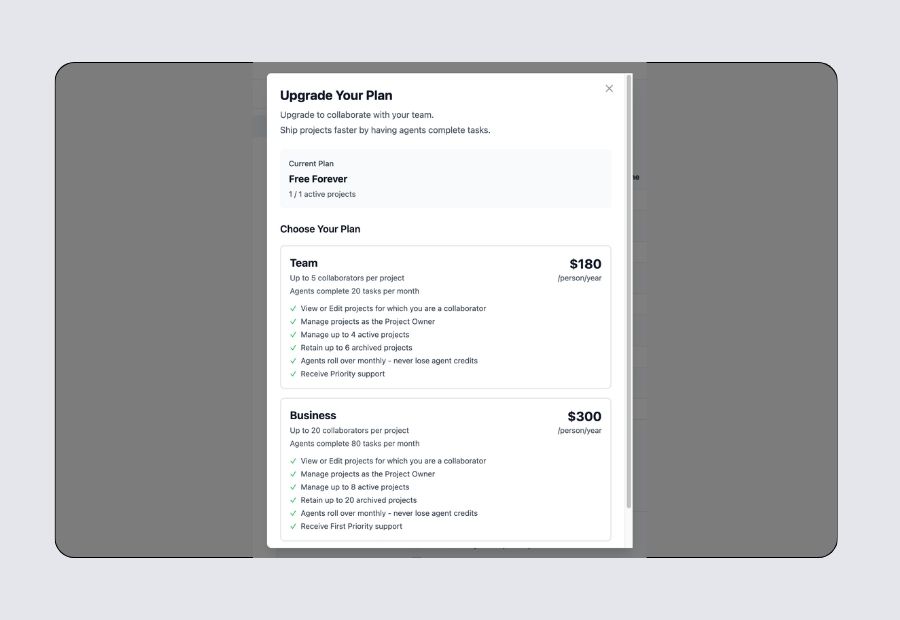
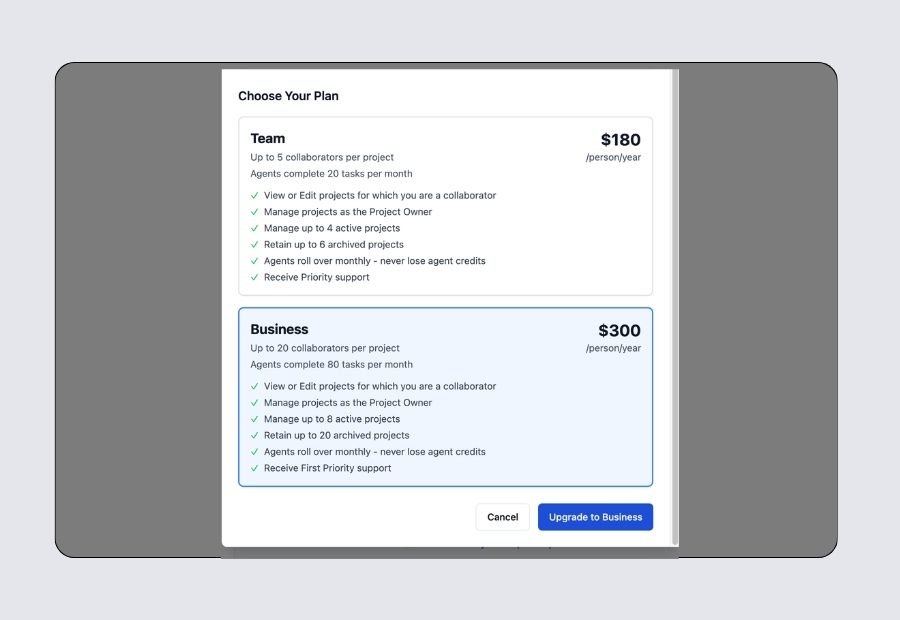
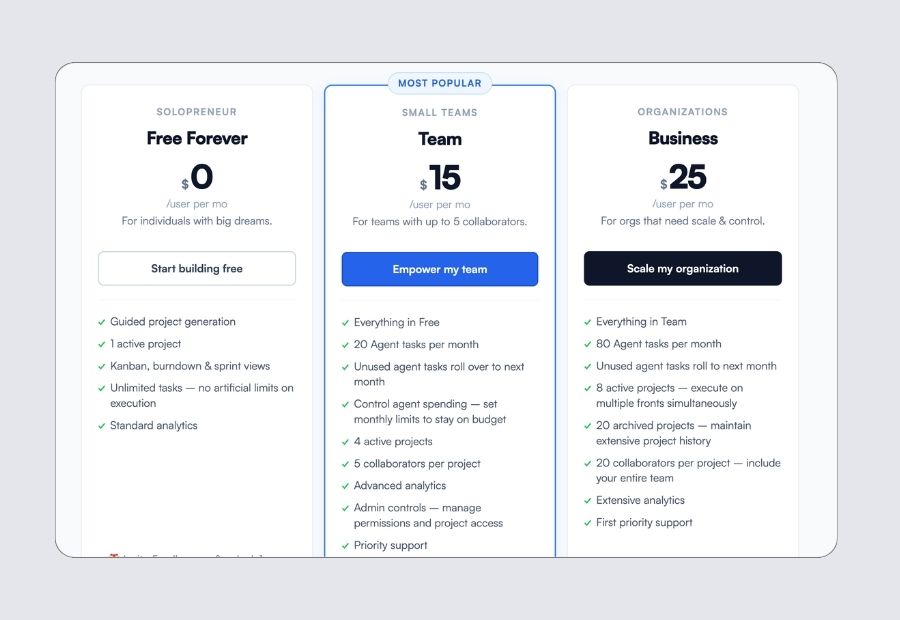
Charge enough that losing the customer would sting — for both of you. Too low and they do not take it seriously. Too high and you lose before the conversation starts. A number in the range where the buyer pauses briefly and then says yes is the right starting price. CorZen includes a Design Pricing Model agent to guide you to the right price for your product and market.
Generate revenue.
Set your goal. Answer a few questions. CorZen turns it into a week-by-week plan you can run without guessing what comes next.
Choose my speed to revenue