
Build your hiring plan before you need it.
Most teams scramble to hire after the gap already hurts. A clear hiring plan tells you who to add, when, and what it costs — before the pressure hits.
Generate my hiring planA hiring plan connects your revenue targets to headcount decisions, so every role you open has a reason and a budget behind it.
Most founders wait too long and then hire reactively with a job post that lacks clear criteria. The result is a team that grew fast and now moves more slowly. You may even become the ‘person of the day’ on LinkedIn whose job posting is mocked for being clearly written by AI and not grounded in reality. That is avoidable.
The right staffing plan tells you which roles unlock the next stage of growth, what each position costs across a full year, and how to measure whether hiring is working.
By the numbers
Everything between the goal and the result
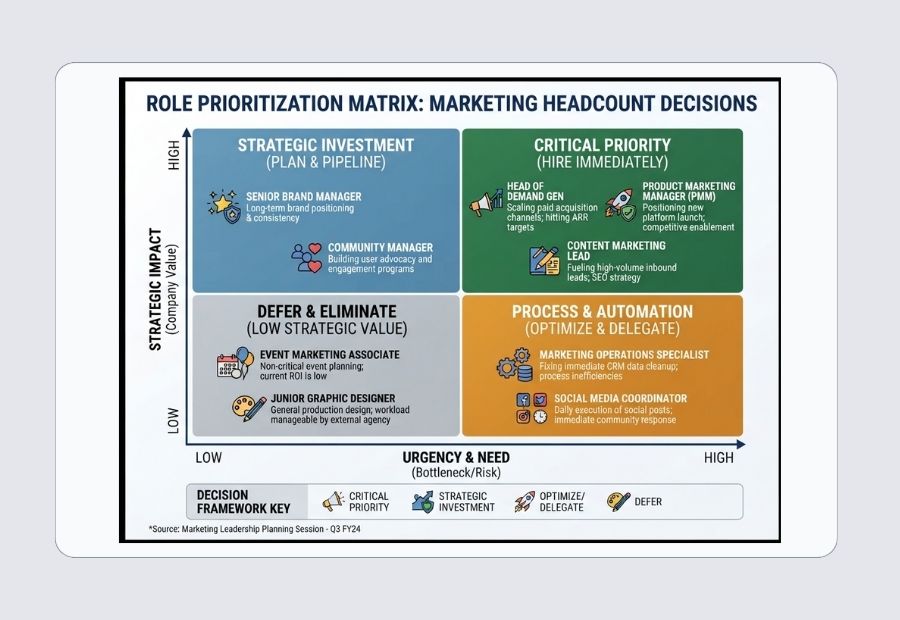
Role Prioritization Matrix
Not every open role has the same leverage. A prioritization matrix ranks positions by revenue impact, urgency, and cost so you spend headcount budget where it moves the business forward, not where the loudest team member complained.
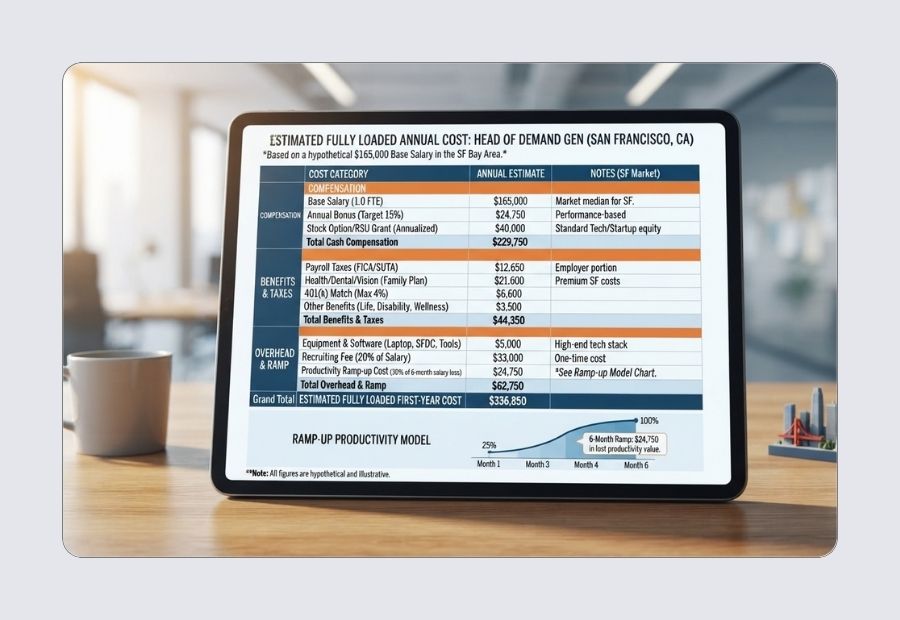
Budget and Timeline Estimates
Salary is only part of the cost. A complete headcount plan accounts for recruiting fees, onboarding time, ramp periods, and benefits — so the number you budget actually matches the number you spend.
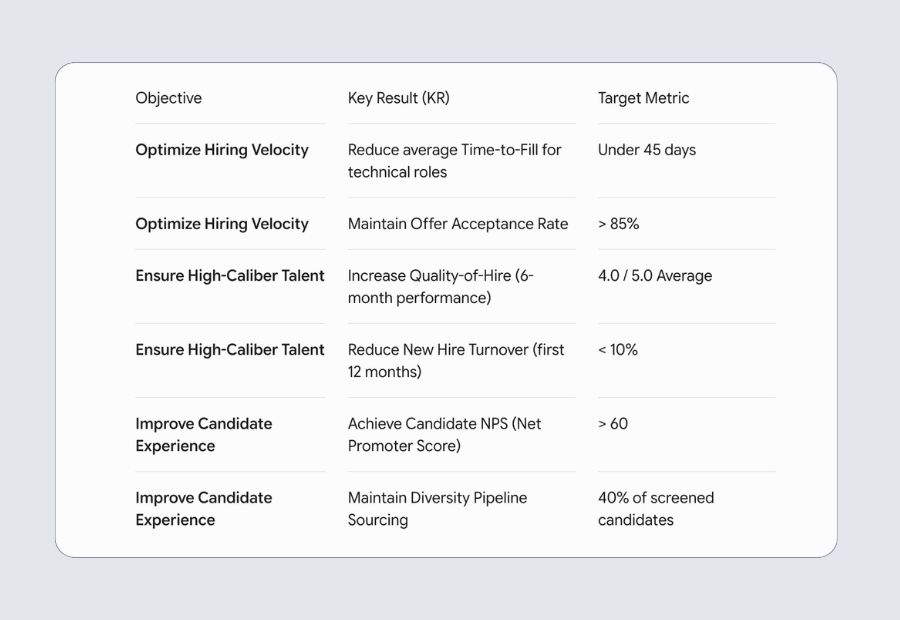
OKRs for Talent Acquisition
Hiring without targets is just activity. OKRs for talent acquisition set clear outcomes — time-to-fill, quality-of-hire, offer acceptance rate — so you know whether your recruiting is working before the quarter ends.
Offer-to-Start Confidence
A good hiring plan closes the gap between the offer letter and the first productive week. Clear onboarding milestones and role expectations reduce early turnover and speed up ramp.
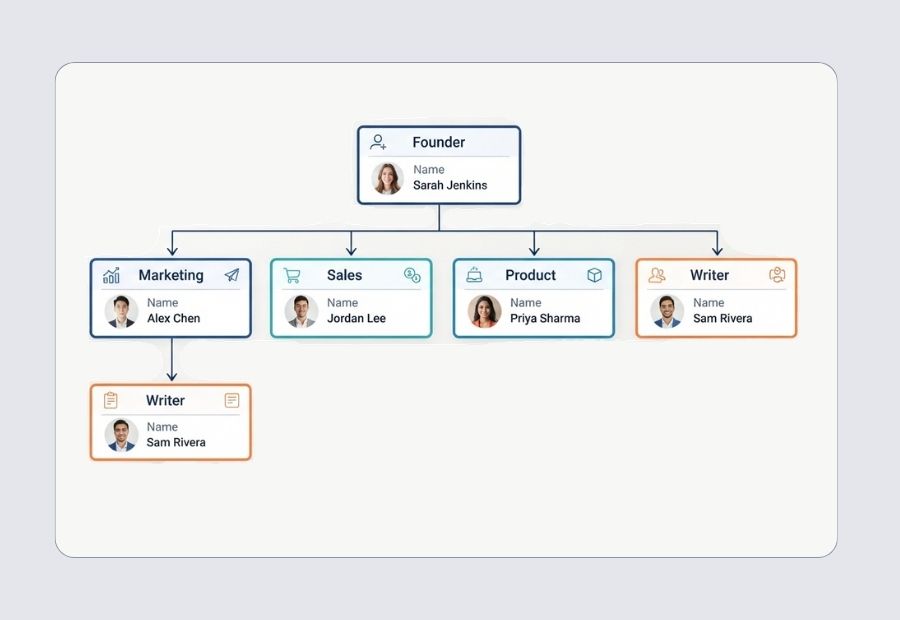
Scaling Without Chaos
Teams that scale without a staffing plan end up with overlapping responsibilities, undefined ownership, and managers stretched too thin. A headcount plan documents structure before the org chart gets messy.
Weekly Task Visibility
A hiring plan does not live in a spreadsheet that nobody opens. Breaking it into weekly tasks keeps recruiting, onboarding, and budget reviews visible alongside every other business priority.
How it works, step by step
That is how long the AI discovery interview takes to produce a full hiring plan with prioritized roles, budget estimates, and weekly tasks.
What changes when you get this right
Every open role has a clear business case attached to it before the job post goes live.
Headcount decisions come from the plan, not from whoever complained loudest this quarter.
Recruiting velocity is measurable — time-to-fill drops because targets exist and are tracked.
New hires ramp faster because expectations and milestones were documented before day one.
You stop absorbing every gap yourself because the staffing plan shows what the team is actually missing.
The org chart scales without chaos because structure was designed ahead of the growth, not after it.
Frequently asked questions
Yes. The AI discovery interview works whether you are hiring your second employee or building out a team of twenty. It generates a plan with weekly tasks, role priorities, and budget context sized to where your business is right now.
Score each open role against three factors: revenue impact, urgency, and cost. The role that scores highest on revenue impact and urgency at the lowest cost fills first. Everything else ranks below it until that hire is producing.
Headcount decisions should trace back to revenue targets and operational capacity. A hiring plan that lives inside the same project as your marketing and growth work makes that connection visible — every role justified by the business goal it serves.
They are often used interchangeably, but a staffing plan tends to focus on coverage and resource allocation — who covers what work. A headcount plan is narrower: it tracks the number of people, their roles, and the budget required. A complete hiring plan combines both.
The most useful hiring OKRs are time-to-fill, quality-of-hire measured by 90-day retention and manager rating, offer acceptance rate, and cost-per-hire. Track these quarterly alongside revenue OKRs so hiring stays accountable to the business plan.
A complete hiring plan covers role prioritization, full-cost budget estimates, a realistic timeline with milestones, and OKRs that measure whether recruiting is working. It should also define the org structure each hire supports so decisions stay tied to business outcomes.
Hire the right person.
Set your goal. Answer a few questions. CorZen turns it into a week-by-week plan you can run without guessing what comes next.
See options to generate my plan