
Stop guessing. Build a GTM plan that ships.
A go-to-market plan is a sequence of decisions — who, what, where, how much — followed by a calendar that tells you what to do this week.
Build my GTM planMost GTM plans fail before they start because the plan is a document instead of a sequence, and nobody owns the work. It’s something that gets checked off as ‘done’ without adding value for the customer or the company.
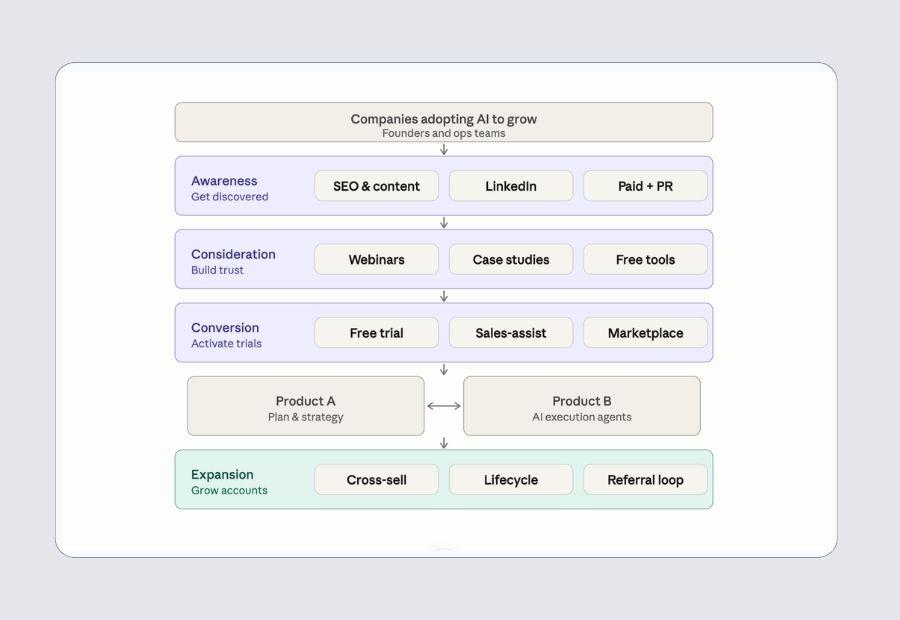
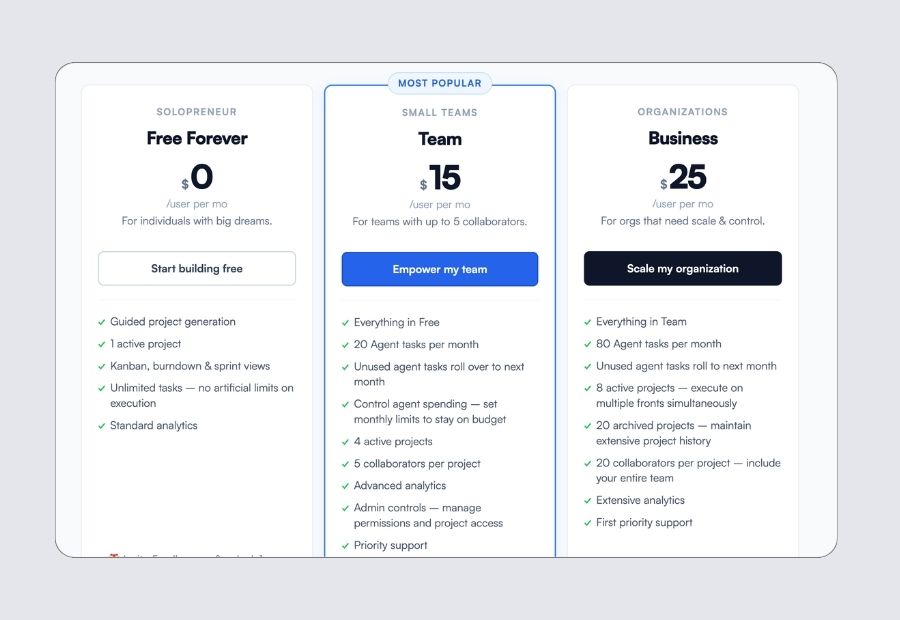
A real GTM plan has four parts: a clear buyer, a channel and message, a pricing decision, and a weekly execution calendar. When all four are in place, the work moves. When one is missing, everything stalls.
The outcome is not a prettier Notion doc. The outcome is a pipeline. Customers show up. Revenue becomes predictable. You stop reinventing the plan every Monday morning.
By the numbers
Everything between the goal and the result
You know exactly who buys
The buyer profile is specific enough to reject the wrong opportunities. You stop chasing leads that were never going to close.
One channel, done well
You pick one channel and go deep before adding a second. Scattered effort stops draining your energy while revenue grows as though “by magic”.
Pricing holds under pressure
Your offer is positioned clearly enough that price objections drop. You are not discounting to close every deal.
Weekly tasks replace weekly decisions
The plan breaks into weekly actions with owners. You stop deciding what to do next and start doing it.
Progress is visible without a meeting
Everyone on the team sees what is done, what is next, and what is blocked. Status updates become unnecessary.
The plan survives contact with reality
When a channel underperforms, you adjust one variable instead of scrapping everything. The structure holds.
How it works, step by step

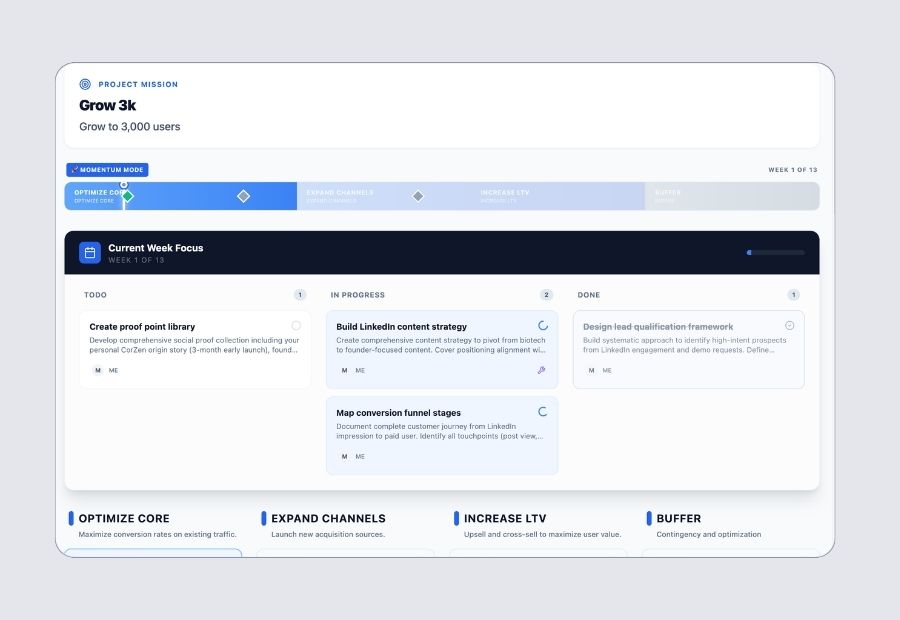
That is how long it takes to go from a business objective to a full GTM plan with weekly tasks and assigned owners.
What changes when you get this right
Pipeline becomes predictable instead of random.
The team knows what to do this week without a planning meeting.
Pricing conversations get shorter because positioning does the work.
New channels get added to a working foundation instead of replacing a broken one.
Founders stop being the only person who holds the go-to-market strategy in their head.
Revenue compounds because execution is consistent, not heroic.
Common questions
The answers founders ask before they commit time to building this.
What is a go-to-market plan?
A go-to-market plan is a sequence of four decisions: who your buyer is, which channel and message you will use to reach them, how you will price and package your offer, and what you will execute week by week. It’s an operational playbook rather than “a vision document.”
How long does it take to build a GTM plan?
Done manually, most founders spend one to three weeks on research, drafting, and alignment. With an AI-guided discovery process, you can produce a complete plan with weekly tasks in under 30 minutes.
What is the most common reason GTM plans fail?
The plan never becomes a calendar. Founders write a strategy document, then return to operating on instinct. A plan that does not break into weekly tasks with owners does not get executed.
Do I need a full marketing team to run a GTM plan?
No. The plans that work for early-stage companies are simple: one buyer profile, one channel, one offer. A solo founder or a team of two can execute a focused GTM plan without specialists.
How do I know if my GTM plan is working?
Pipeline moves and deals close in the channels you targeted. If neither is happening after four to six weeks of consistent execution, the buyer definition or the channel is wrong — not the effort.
What is the difference between a GTM plan and a marketing plan?
A marketing plan covers ongoing activity. A GTM plan is a launch sequence with a defined buyer, offer, and channel decision at its core. You build the GTM plan first, then marketing executes inside it.
Master distribution.
Set your goal. Answer a few questions. CorZen turns it into a week-by-week plan you can run without guessing what comes next.
Show me options to build my GTM plan