
Your micro SaaS needs a marketing plan that fits.
Most micro SaaS tools die from invisibility because the marketing never gets focused. One clear plan, one channel, and the right message changes that.
Generate my marketing planMicro SaaS is not a small version of enterprise software. It is a different game in which the market is narrower, the team is thinner, and the margin for wasted effort is basically zero.
The founders who grow do one thing well before they do two things adequately. They pick a channel. They write for one customer. They stop trying to compete on volume and start competing on relevance.
A micro SaaS marketing plan is successful when it makes the choices that matter and cuts everything else.
By the numbers
Everything between the goal and the result
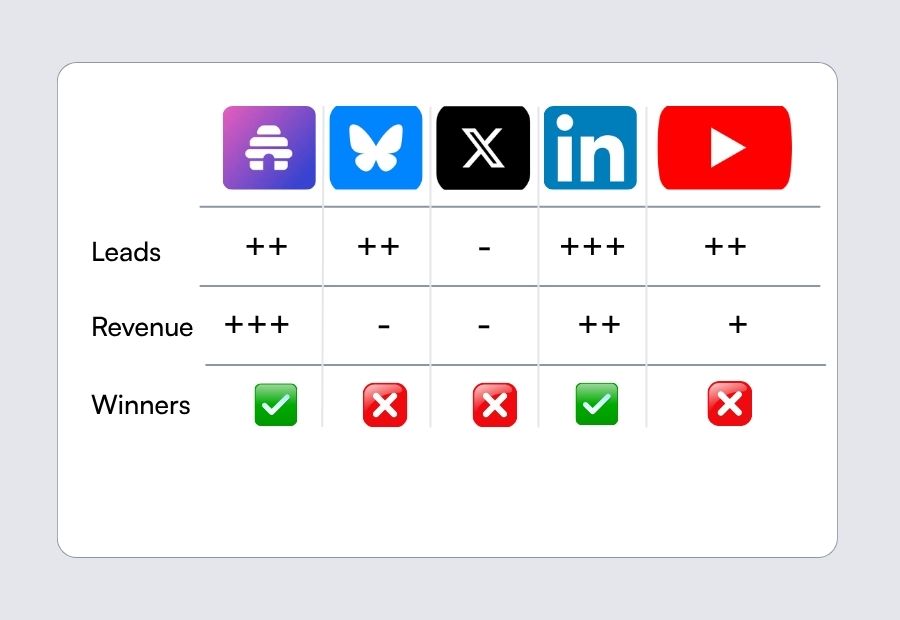
One channel, fully owned
Spreading thin across five channels produces nothing. Founders who commit to one channel and work it to saturation consistently out-acquire those who spread effort across many.
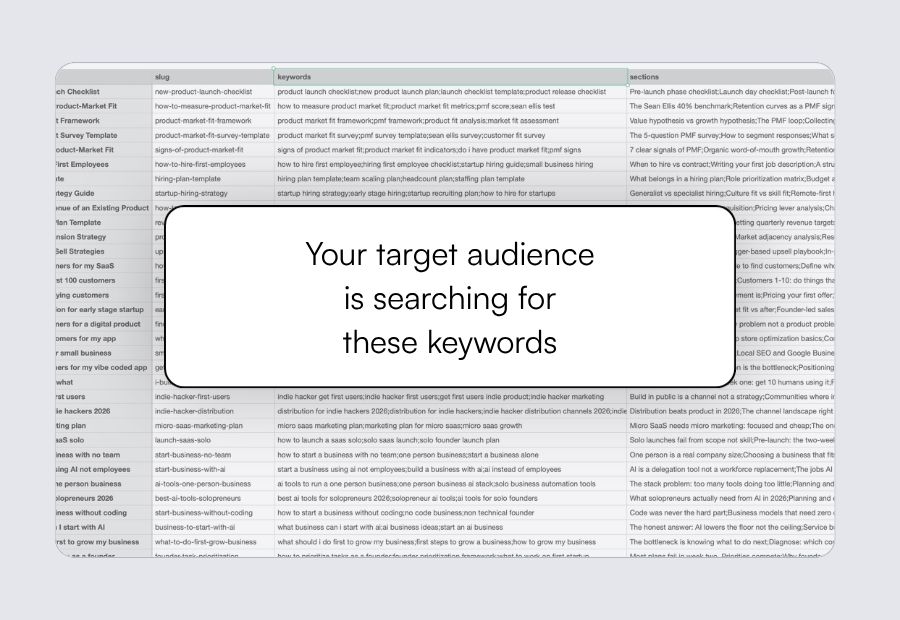
SEO that compounds over time
Paid ads stop when the budget stops. SEO builds an asset. For micro SaaS with low acquisition budgets, organic search is the channel that keeps paying after the work is done.
Earn word of mouth
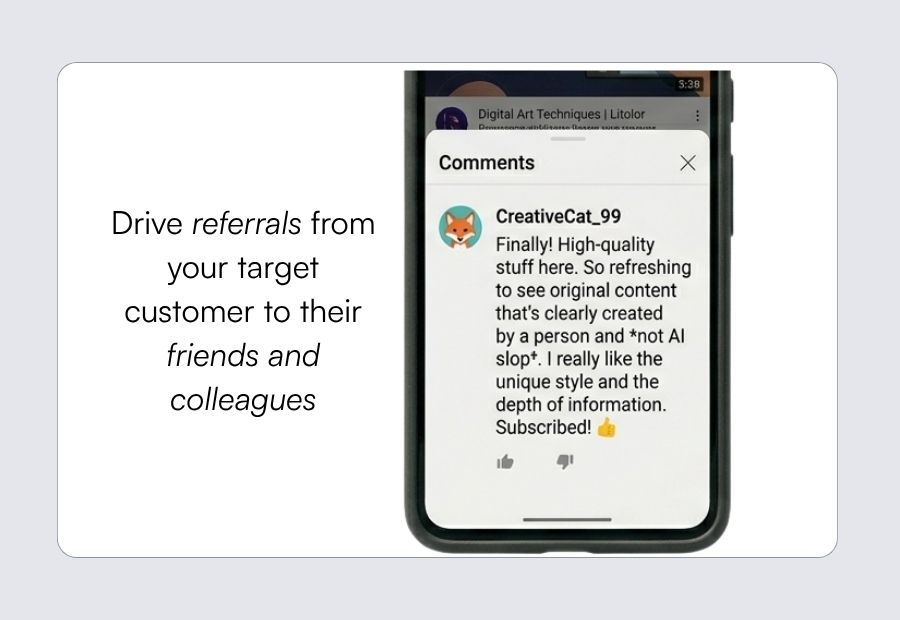
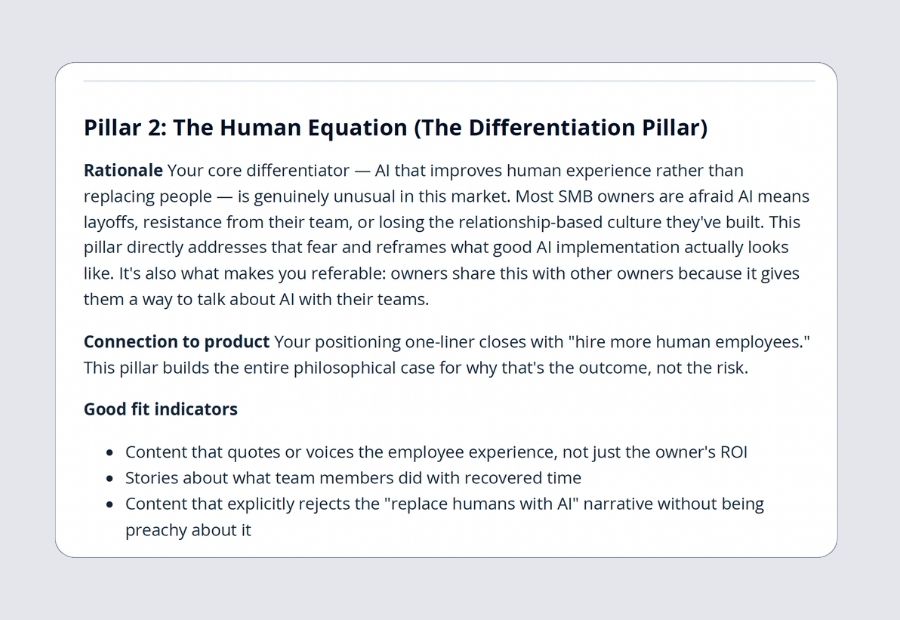
When your positioning is sharp enough, customers describe you to other customers without prompting. Vague positioning never earns referrals — specific positioning does.
Pricing matches perceived value
Underpriced products attract the wrong customers and signal low confidence. Pricing set against the value delivered — not the competition — produces better retention and higher margins.
A plan that fits a team of one
A 40-page marketing strategy is useless when you are doing everything yourself. The right plan is short, sequenced, and built around what one person can actually execute.
Weekly tasks, not quarterly aspirations
Goals set three months out rarely survive contact with the week. Breaking the plan into weekly tasks means the work moves forward without constant re-prioritization.
How it works, step by step
One AI-guided interview produces a complete, prioritized marketing plan ready to execute.
What changes when you get this right
Customers describe your product to colleagues without being asked, because the positioning is specific enough to repeat.
Your acquisition channel runs in the background while you build — no ad budget required to keep it moving.
Pricing conversations stop being uncomfortable. The number matches the value, and customers feel it.
Weekly tasks replace vague quarterly goals. Progress is visible without a separate reporting process.
SEO pages rank and generate signups months after the content was written — the work pays forward.
You stop being the bottleneck on marketing decisions because the plan already made the hard choices.
Common questions
The answers founders ask before they commit time to building this.
What makes a micro SaaS marketing plan different from a standard one?
Scope and constraint. A standard marketing plan assumes a team, a budget, and multiple channels running in parallel. A micro SaaS plan assumes one or two people, a limited budget, and the need to pick one channel and execute it completely before adding another.
Which marketing channel works best for micro SaaS?
There is no universal answer, but SEO and niche community distribution consistently outperform paid ads for early-stage micro SaaS with small budgets. The right channel depends on where your specific customer already spends attention.
How do I write positioning for a micro SaaS with a narrow audience?
Narrow is the advantage, not the problem. Name the exact customer, name the exact pain, and say what changes when they use the product. Generic positioning is a symptom of not knowing the customer well enough yet.
How should I price a micro SaaS product?
Price against the value delivered, not against competitors. Underpricing attracts price-sensitive customers who churn. Pricing that reflects the outcome — time saved, revenue generated, problem eliminated — holds better and attracts customers who stay.
How long does it take to see results from a micro SaaS marketing plan?
SEO takes months to compound. Community and content distribution can produce early traction in weeks. The plan itself takes 30 minutes to generate. What takes time is consistent execution — the plan just ensures the effort goes in the right direction.
Can one person execute a full micro SaaS marketing plan?
Yes, if the plan is built for one person. That means weekly tasks, one active channel, and AI doing the production work — drafts, audits, sequences — so the founder is making decisions, not writing copy from scratch every week.
It’s Time To Grow.
Set your goal. Answer a few questions. CorZen turns it into a week-by-week plan you can run without guessing what comes next.
Generate my marketing plan