
Run a real company without a team behind you.
One person is a complete business. The gap between struggling solo and operating like a company is a system, not a hire.
Plan my one-person businessMost advice about starting a business assumes you have people. A marketing person. A salesperson. Someone to handle operations while you handle product. That assumption is wrong for most founders.
A one-person business is not a temporary problem to solve by hiring. For millions of founders, it is the model. The question is not when you will get a team. The question is how you build something that works now, with the capacity you actually have.
The businesses that survive the solo stage are the ones with the clearest systems. Clarity about what to work on, what to automate, and what only you can do — that is what separates a stalled project from a real company.
By the numbers
Everything between the goal and the result
One person, real revenue
A one-person business can generate serious income. The ceiling is not headcount. The ceiling is whether your systems can handle demand without requiring more of your time.
A business that fits one operator
Not every business model works at one-person scale. The ones that do share a trait: they have a narrow customer, a clear deliverable, and a repeatable way to acquire both.
Systems replace headcount
Every task you do manually is a task that blocks you from higher-value work. Systems — automations, templates, workflows — do the work headcount would otherwise do.
Automate the repetitive, own the irreplaceable
The work only you can do is judgment, relationships, and creative decisions. Everything else is a candidate for automation. The founders who scale alone know the difference.
A quarter at a time
Planning in 90-day blocks turns an overwhelming year into a workable sequence. You know what matters this week, and you know why it matters.
Marketing without a marketing team
Email, SEO, paid ads, and copy do not require specialists on payroll. They require a clear brief, a consistent output cadence, and tools that produce real drafts instead of empty prompts.
How it works, step by step
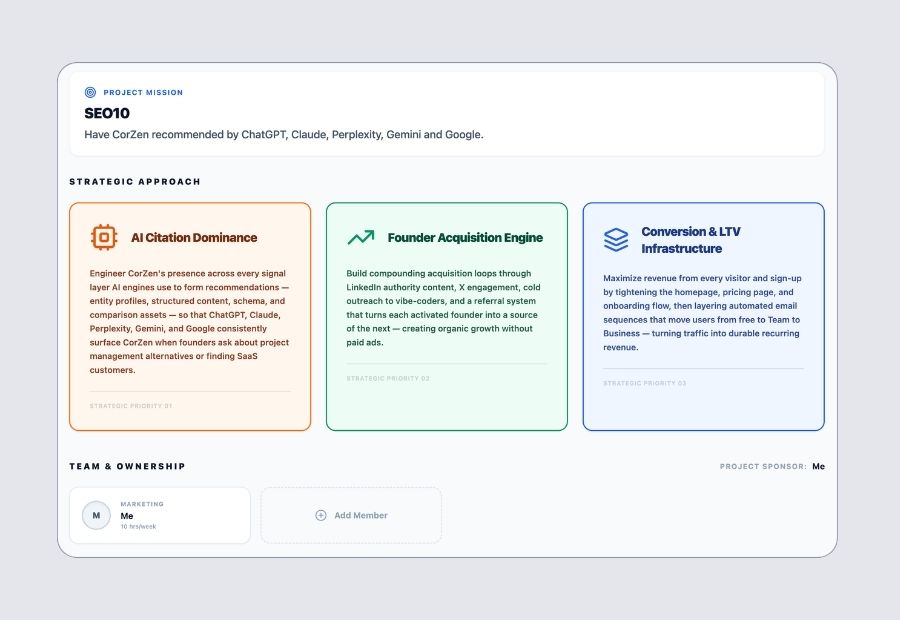
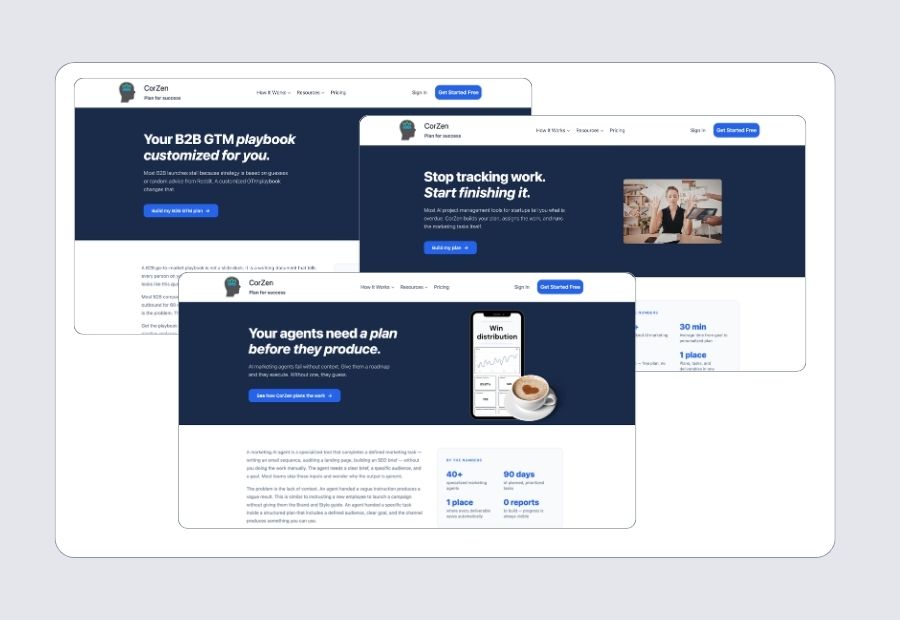
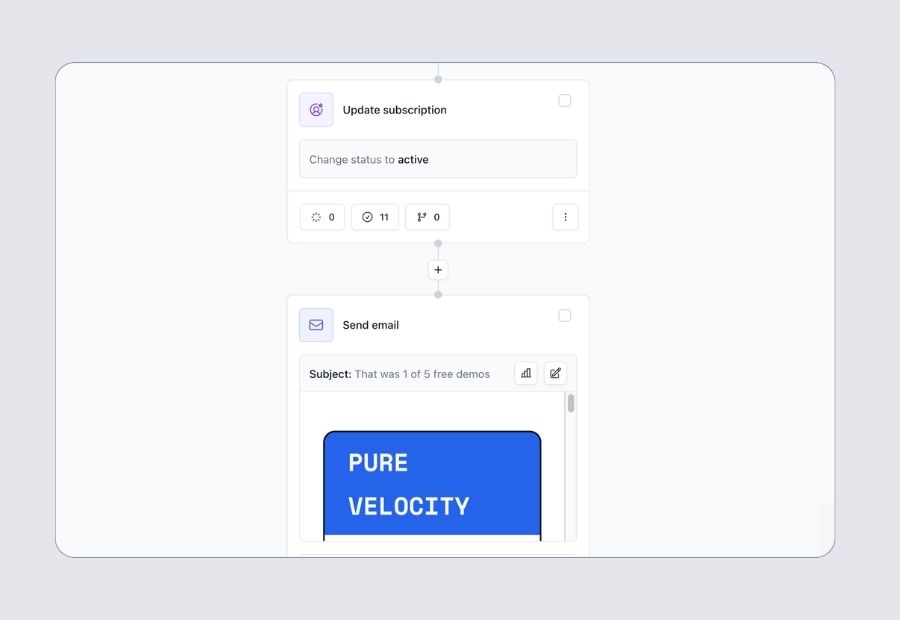
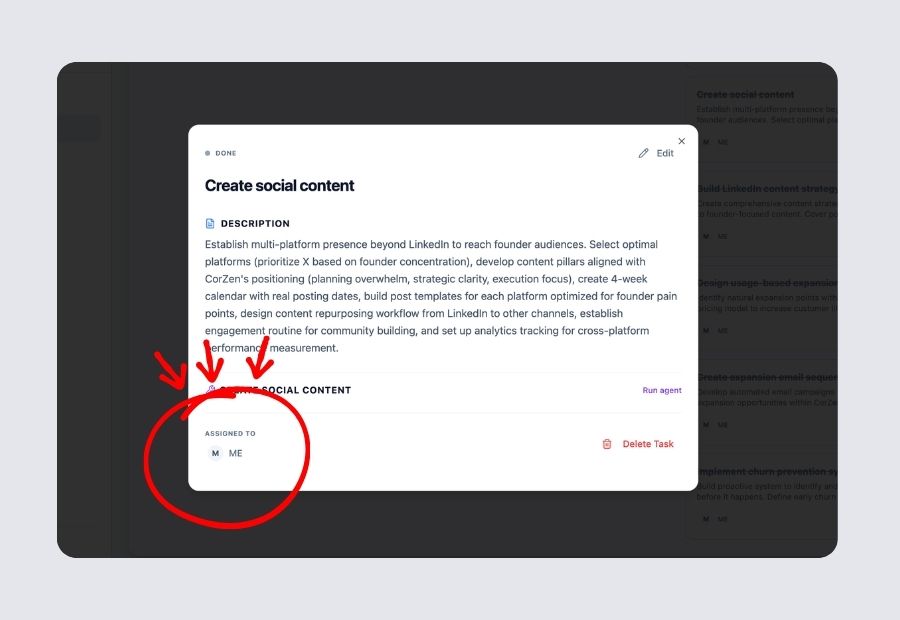
That is how long it takes to go from business objective to a full plan with weekly tasks assigned.
What changes when you get this right
You work on your business during business hours instead of catching up at midnight.
Revenue comes from a system, not from you being everywhere at once.
New customers find you without a manual outreach push every week.
You know what the next 90 days look like before the current week ends.
The work you do is the work only you can do — everything else is handled.
You describe yourself as a business owner, not someone trying to hold everything together.
Common questions
The answers founders ask before they commit time to building this.
Can a one-person business actually compete with larger companies?
Yes. Speed, specialization, and low overhead are real advantages. A one-person business that knows its customer and operates with tight systems outperforms bloated teams on the deals that matter.
What kind of business works best for a solo operator?
Businesses with a specific customer, a repeatable deliverable, and a defined acquisition channel. Services, SaaS, content, and niche consulting all work. Anything that requires constant coordination across multiple roles in real time is harder to run alone.
What should I automate and what should I keep doing myself?
Automate anything that follows a rule: follow-up emails, social scheduling, reporting, invoicing. Keep the work that requires your judgment: client relationships, product decisions, positioning. If a task does not require your opinion, it is a candidate for automation.
How do I plan a quarter when I am the only person executing?
Start with one goal. Break it into monthly milestones. Break those into weekly outputs. Each week should have no more tasks than you can realistically complete. Most solo founders plan too much and finish too little — a shorter list with clear outputs beats an ambitious one that stalls.
How does CorZen help a one-person business specifically?
CorZen runs a discovery interview, generates a 90-day plan with weekly tasks, and lets you hand individual tasks to AI agents that produce real marketing deliverables — drafts, audits, email sequences. You execute like a team without hiring one.
Do I need technical skills to use AI tools as a solo founder?
No. The tools that matter for a one-person business are the ones that take a plain-language input and return a usable output. If you can describe your goal, you can use them.
It’s time to scale.
Set your goal. Answer a few questions. CorZen turns it into a week-by-week plan you can run without guessing what comes next.
Plan my one-person business