
Build a real business without writing a single line of code.
Code was never the hard part. The hard part is knowing what to build, who it’s for, and what to do in the first 90 days. That’s the problem worth solving.
Build my businessMost non-technical founders stall in the same place. They have a real idea, a real market, and zero interest in becoming a developer. Then they spend six months trying to figure out whether they need to hire one.
They don’t. The tools exist. The business models exist. What’s missing is a clear picture of what the business actually looks like when it’s working — and a plan that gets there without a detour through a bootcamp.
When you remove code from the equation and focus on the decisions that actually determine whether your business survives its first year, your likelihood of survival climbs far above average. It becomes your unfair advantage.
By the numbers
Everything between the goal and the result
A business that runs on systems, not software
No-code businesses are not second-tier businesses. The most durable ones are built on repeatable processes, not custom software. When the systems are right, the tool almost doesn’t matter.
Validation before a dollar leaves your account
Non-technical founders have one major advantage: they’re forced to talk to customers before building anything. That constraint produces better businesses. Validation is the product at this stage.
A plan that survives contact with the market
A 90-day roadmap with weekly tasks is not a document — it’s a decision engine. It tells you what to do next and why. That clarity is what most founders are missing.
Marketing that doesn’t need a specialist on the payroll
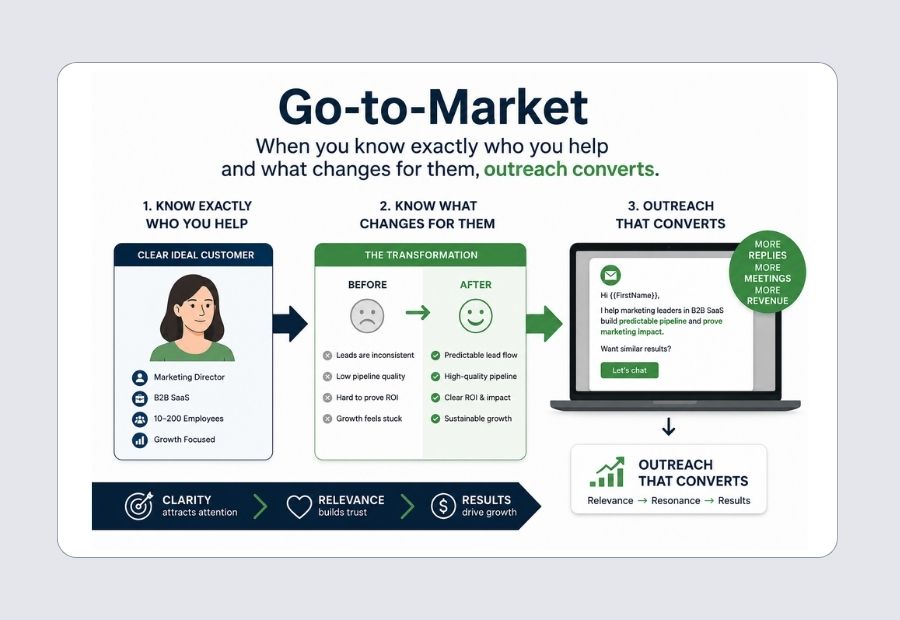
AI agents now produce first drafts of email sequences, ad copy, and SEO content in minutes. Non-technical founders can execute marketing that previously required an agency.
Revenue before you build a product
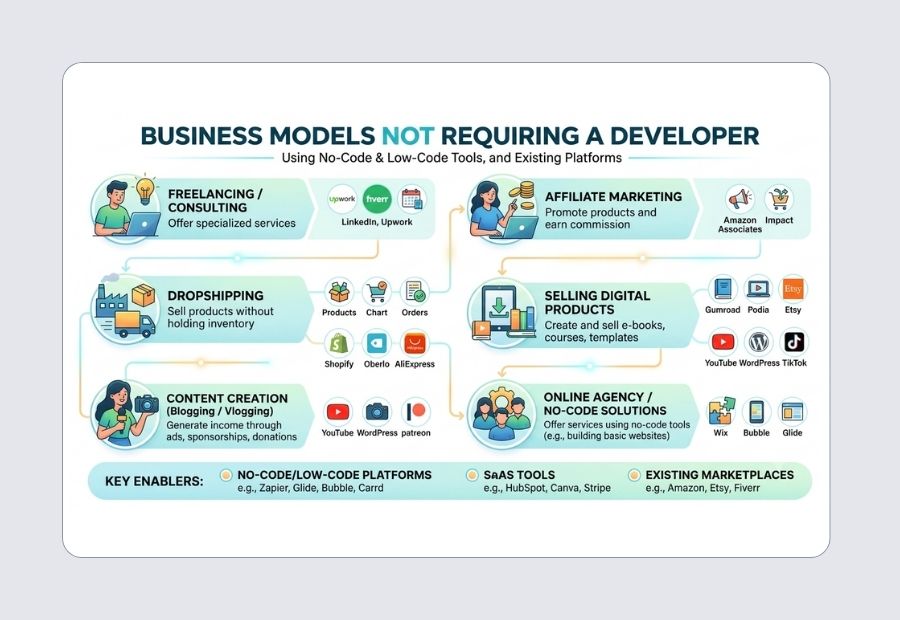
Service businesses, cohort courses, done-for-you offers, and marketplaces can generate real revenue on a landing page and a calendar link. Code is optional. Customers are not.
A founder who is not the bottleneck
When tasks have owners and outputs are tracked, decisions stop living in one person’s head. The business moves whether or not the founder is in every conversation.
How it works, step by step
One AI-guided interview turns a business objective into a prioritized, week-by-week plan ready to execute.
What changes when you get this right
You have paying customers before the product is fully built.
Marketing runs on a repeatable system instead of bursts of effort.
The plan tells you what to do next — you stop making it up week to week.
You stop waiting for a technical co-founder to start making progress.
The business runs on tools and processes anyone on the team can operate.
You make decisions based on what the market has already told you.
Common questions
The answers founders ask before they commit time to building this.
Do I need any technical skills to start a business without coding?
No. The business models that work best for non-technical founders — services, content, cohort courses, marketplaces — require judgment and customer knowledge, not engineering. The tools that support those models are designed for people who don’t write code.
What kinds of businesses can I actually build without code?
Consulting, coaching, done-for-you services, digital products, online courses, newsletters, SaaS businesses built on no-code platforms, and niche marketplaces are all viable. The constraint is not technology — it’s finding a real problem and a customer willing to pay to have it solved.
How do I validate my idea before spending money on tools?
Talk to ten people who fit your target customer profile before building anything. If you can collect a waitlist signup, a deposit, or a letter of intent, the idea has legs. Most founders skip this step and pay for it later.
What should a non-technical founder focus on in the first 90 days?
Customer validation, positioning, and one repeatable acquisition channel. Those three things, done well, produce the first ten customers. Everything else — product refinement, automation, scale — comes after.
How does CorZen help non-technical founders specifically?
CorZen runs a discovery interview, then generates a 90-day plan broken into weekly tasks. Each task can be handed to a specialized AI agent that produces the actual deliverable — copy, email sequences, SEO structure — so founders without marketing teams can still execute like one.
Is the free plan actually useful or is it just a demo?
The free plan lets a solo founder complete the discovery interview and get a full plan. Agents are unlocked on paid plans. It is a real working product, not a sandbox.
It’s Time To Build Your Business.
Set your goal. Answer a few questions. CorZen turns it into a week-by-week plan you can run without guessing what comes next.
Build my business