
What should you do first to grow your business?
Find the one constraint holding back growth right now, such as too few leads, weak conversion or customers who leave, and fix it first. Then give the quarter one goal and break it into weekly tasks.
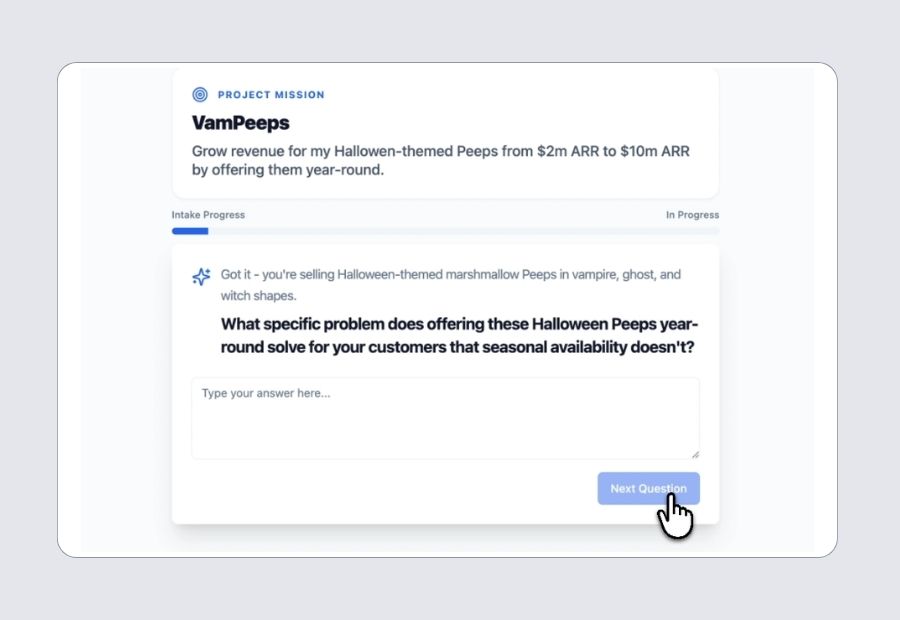
Tell CorZen your goal. It builds the roadmap.The first thing to do to grow your business is find your biggest constraint: the earliest point where customers drop off. If you have too few leads, work on getting found. If leads come in but don’t buy, fix your offer and message. If customers buy but leave, fix onboarding and retention. Set one goal for the quarter around that constraint, then break it into weekly tasks.
Every growth problem looks different on the surface. Wrong pricing. No leads. High churn. Low conversion. But underneath most of them is the same root issue: you picked the next action before you diagnosed the real constraint.
When you fix the right thing first, everything downstream gets easier. Revenue moves. The team stops spinning. You stop re-doing work from two months ago. That is what getting the sequence right actually produces.
CorZen identifies your constraint, enables you to commit to one goal, and spend energy that compounds instead of scattering effort across ten priorities that never close.
This is the idea behind Eliyahu Goldratt’s Theory of Constraints, from his book The Goal (1984): a business can only move as fast as its tightest bottleneck, so improving anything else first won’t raise the result.
Last updated: September 30, 2026
By the numbers
What does fixing the right constraint give you?
One constraint, named clearly
Growth stalls because founders treat ten symptoms instead of one cause. When you name the real constraint, the right moves become obvious and the wrong ones stop taking up calendar space.
A single goal owns the quarter
Splitting focus between three goals produces zero. One goal per quarter means every task either feeds it or gets cut. Progress becomes measurable instead of theoretical.
Sequence beats raw effort
Doing the right things in the wrong order still fails. When your tasks are sequenced correctly, each one makes the next one easier. Compounding starts on week one.
Weekly tasks, not vague milestones
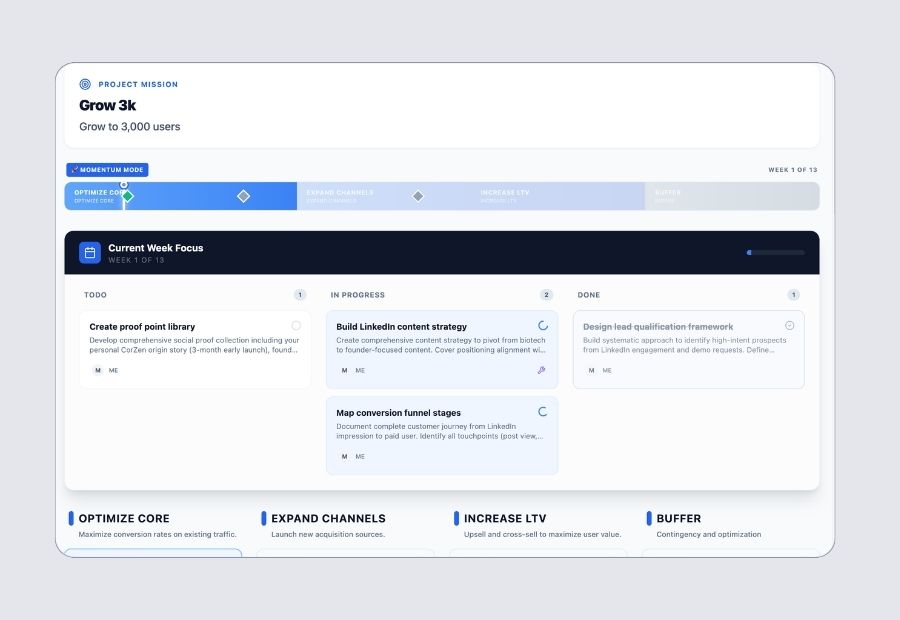
Quarterly goals die because no one knows what to do Monday morning. Breaking the goal into weekly tasks removes that gap. You always know the next concrete move.
Marketing work gets done, not just tracked
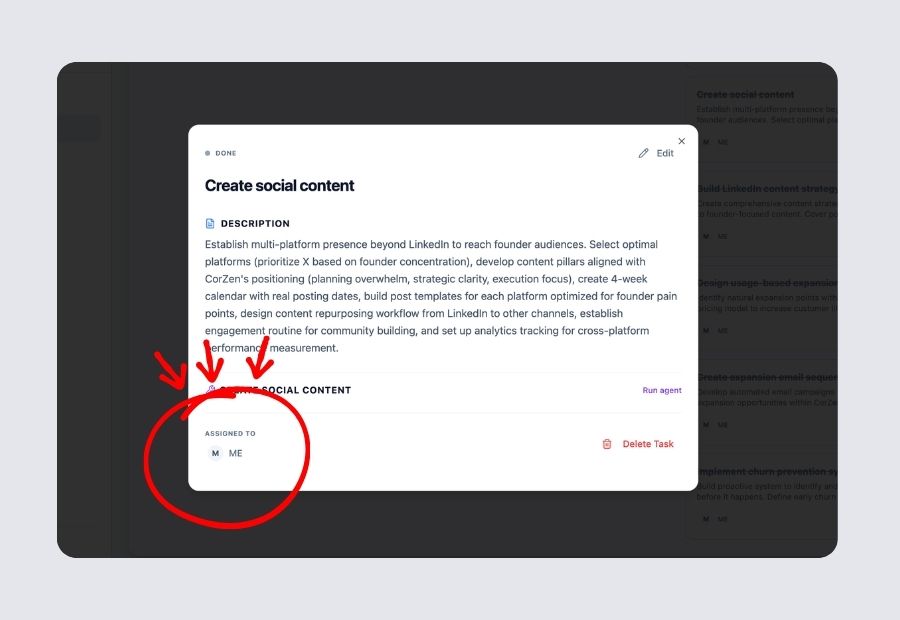
A plan only matters when the work gets done. The plan produces real deliverables — copy, email sequences, SEO audits — not just a list of things someone might do someday.
Progress you can see
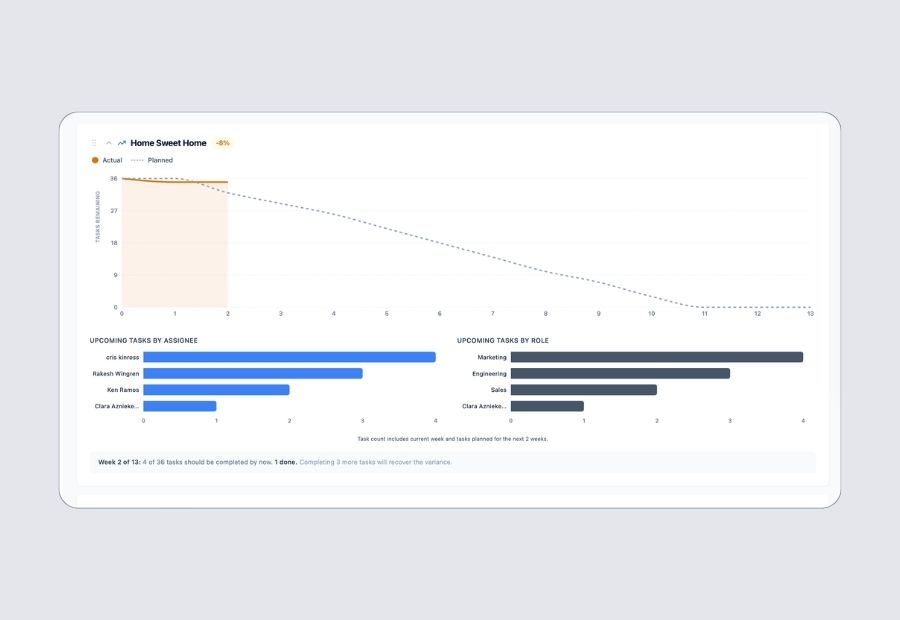
A dashboard that shows what is done, what is next, and what is overdue replaces the weekly status meeting. You see the shape of the quarter at a glance.
How do you decide what to do first, step by step?
of lab and field studies found that specific, challenging goals led to better performance than easy goals or no goals (Locke and colleagues, Psychological Bulletin, 1981). One clear goal for the quarter is a proven place to start.
What changes when you get this right
You wake up on Monday knowing exactly what to do and why it matters this week.
Revenue moves because you fixed the constraint that was actually blocking it, not a symptom two layers above.
Your team stops asking what the priority is — the plan answers that question before anyone has to.
Marketing work ships on schedule instead of sitting in a backlog no one owns.
The quarter closes with one measurable win instead of five half-finished initiatives.
You stop being the bottleneck on every decision because the sequence is visible to everyone.
Common questions about where to start growing your business
The answers founders ask before they commit time to building this.
What should I do first to grow my business?
Diagnose before you act. Identify the single constraint blocking growth right now — whether that is lead volume, conversion rate, retention, or positioning. Fix that one thing before touching anything else.
How do I know which constraint to fix first?
Map your funnel and find where the drop-off is steepest. If you have no leads, distribution is the constraint. If leads exist but do not convert, the problem is positioning or offer clarity. Start at the earliest broken stage.
Why does focusing on one goal per quarter matter?
Three goals in parallel means none of them get enough consistent effort to compound. One goal creates a single definition of done. Every week either moves you toward it or wastes time.
What does ‘sequencing beats effort’ mean in practice?
It means doing the right things in the right order. Building a paid ads campaign before you have a converting landing page wastes budget. Correct sequencing means each completed task makes the next one easier to do.
How does CorZen help me figure out my first steps?
CorZen runs an AI-guided discovery interview, then generates a full plan broken into weekly tasks. You describe your goal and it produces the sequence — including marketing deliverables you can run directly inside the plan.
Do I need a dedicated marketing team to use this?
No. The platform is built specifically for founders and small teams doing their own marketing. On Team and Business plans, the AI agents handle specialist work — copywriting, email sequences, SEO — so you do not need to hire for every skill.
It’s time to scale.
Set your goal. Answer a few questions. CorZen turns it into a week-by-week plan you can run without guessing what comes next.
Tell CorZen your goal. It builds the roadmap.