
I built an app.
What do I do now?
Put it in front of five to ten real users this week, watch how they use it, ask the ones who get value to pay, and pick one channel where people like them already spend time.
Get your personalized plan to find customersAfter you build an app, your next job is getting it in front of real users, not adding features. Watch five to ten people from your target audience use it, note what they skip, and fix the biggest problem. Ask the ones who get value to pay. Then pick one channel where people like them already gather and go deep on it.
The app works. You can demo it. You might even have a landing page. But your user count is zero, or close to it, and the silence is loud.
This is the most common place founders get stuck. Not because they lack ideas but because distribution is a different skill than building. It has different feedback loops, different timelines, and a different definition of done.
What follows is what actually matters in the weeks after launch — and what success looks like when you get it right.
Early users rarely arrive on their own, and that is normal. Airbnb’s founders went door to door in New York to recruit hosts and help improve their listings (Paul Graham, “Do Things That Don’t Scale,” 2013).
Last updated: September 30, 2026
By the numbers
What should the weeks after launch give you?
Real users in week one
Ten humans using your app tells you more than six months of building. The outcome is a short list of people who chose it, not a long list of people who said it sounds interesting.
Feedback that costs nothing
Your first feedback loop is a conversation, not a survey tool. When it works, users tell you what they actually do inside the product — not what they wish they did.
A first paying user
Free users validate interest. Paying users validate value. The outcome of getting pricing right early is a clear signal that someone believes the product solves a real problem.
A roadmap with weekly clarity
Vague goals produce vague weeks. The outcome of a real plan is knowing exactly what you are doing Monday morning — and why it connects to revenue.
Channels that match the product
Most founders pick channels by instinct. When you get this right, your channel choice follows where your buyers already spend time — and the cost of customer acquisition drops.
Positioning that sticks
When positioning is right, people repeat your description back to you unprompted. That is the signal. Everything before it is a draft.
What should you do after building an app, step by step?

are enough to uncover about 85% of the usability problems in a design. Even one user reveals about a third (Jakob Nielsen, Nielsen Norman Group).
What changes when you get this right
Users describe your product to other people using your exact words.
Revenue arrives before you finish building the next feature.
You know which channel works and stop spreading effort across all of them.
Your weeks have a shape — a clear priority that connects daily work to growth.
Pricing conversations stop feeling awkward because the value is already obvious to the buyer.
The gap between launch and traction closes from months to weeks.
Common questions after building an app
The answers founders ask before they commit time to building this.
I built an app — now what is the first thing I should actually do?
Talk to ten people who are not your friends or family. Get them to use it in front of you. What they do and what they skip tells you more than any analytics dashboard.
How do I get my first users when I have no audience?
Go where the problem already lives. If your app solves a problem for freelancers, go to freelancer communities, Slack groups, Reddit threads. Describe the problem — not the product. The right people will respond.
When should I start charging?
Earlier than feels comfortable. If even one person says they would pay, ask them to. A single payment tells you more than fifty signups.
What if nobody is using my app after launch?
Usually that is a distribution problem before it is a product problem: too few of the right people have seen it yet. You need to be manually putting the product in front of people. Growth does not happen automatically after launch — you have to push it.
How do I know which marketing channel to focus on?
Pick the one channel where your ideal user already hangs out and go deep on it. Trying three channels at once with a small team means doing all three badly.
How does CorZen help after I launch an app?
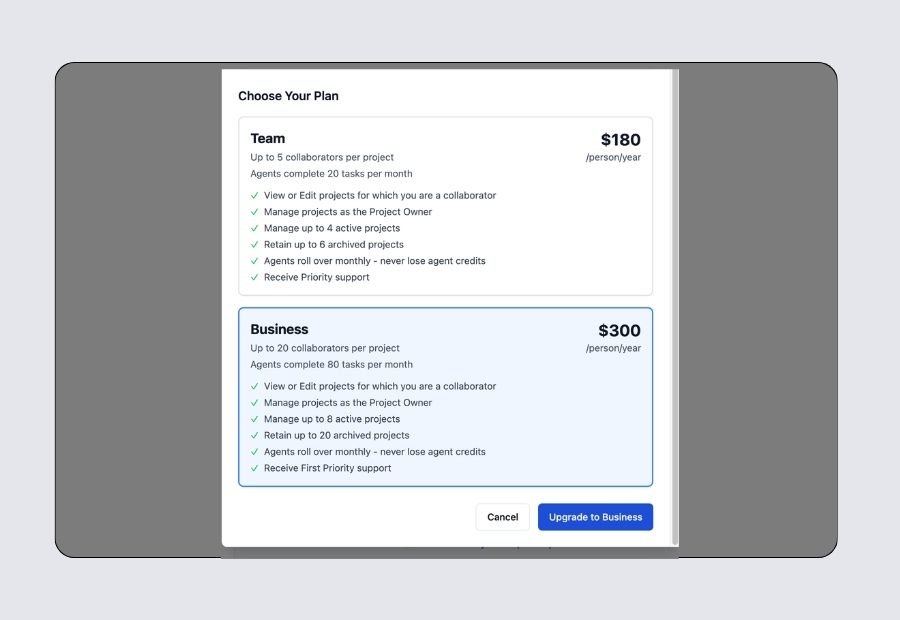
You describe your goal. CorZen runs a discovery interview, then builds a plan with weekly tasks covering user acquisition, messaging, pricing, and go-to-market work. On Team and Business plans, AI agents can do the actual work, and many also run on their own without a plan.
It’s time to grow.
Set your goal. Answer a few questions. CorZen turns it into a week-by-week plan you can run without guessing what comes next.
Choose how fast you want to grow